Table of Contents
Core Attenuation Standards and Shielding Materials
Clinical teams frequently struggle to balance the physical burden of heavy garments against the non-negotiable requirement for ionizing radiation shielding. When selecting equipment across diagnostic suites, cardiac catheterization units, or surgical theaters, the foundational choice centers on core material composition. Traditional lead offers predictable attenuation across broad kilovoltage ranges, yet its cumulative mass causes substantial musculoskeletal strain during extended surgical workflows. Composite and lead-free alloys incorporating antimony, bismuth, or tungsten deliver verified 0.50 mm or 0.35 mm lead equivalence while eliminating up to twenty-five percent of overall garment bulk.
Procurement committees must evaluate typical beam energy profiles before standardizing on composite cores. Lead-free garments perform exceptionally well within standard diagnostic ranges between 60 kVp and 110 kVp, but radiation safety officers should verify independent certification testing under updated IEC 61331-1 standards to ensure complete secondary scatter protection along lateral margins.
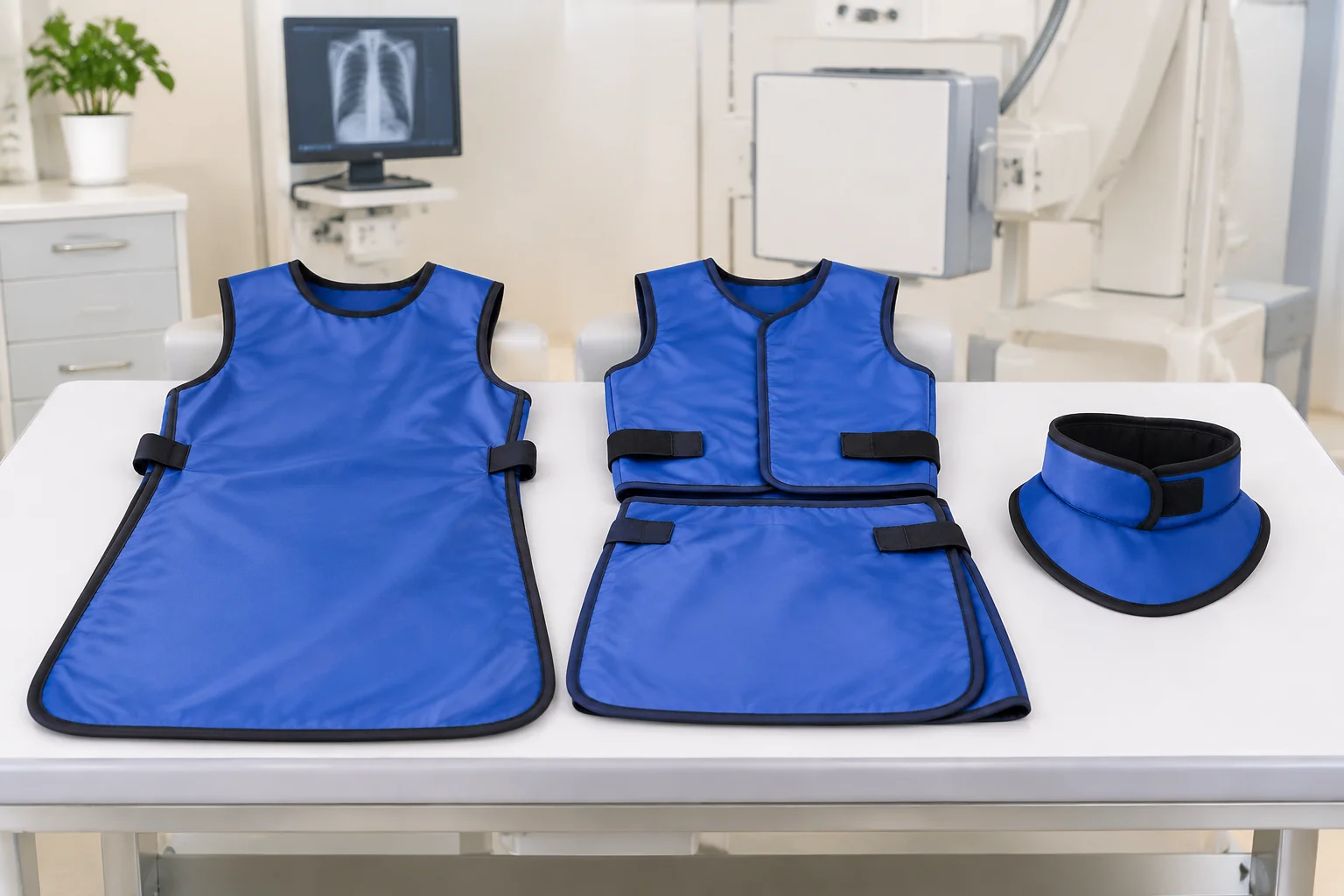
"Garment weight directly correlates with clinical fatigue and long-term spinal injury. Selecting ergonomic shielding tailored to procedural duration is just as vital as verified lead equivalence."
— David Thompson, Lead Equipment Specialist
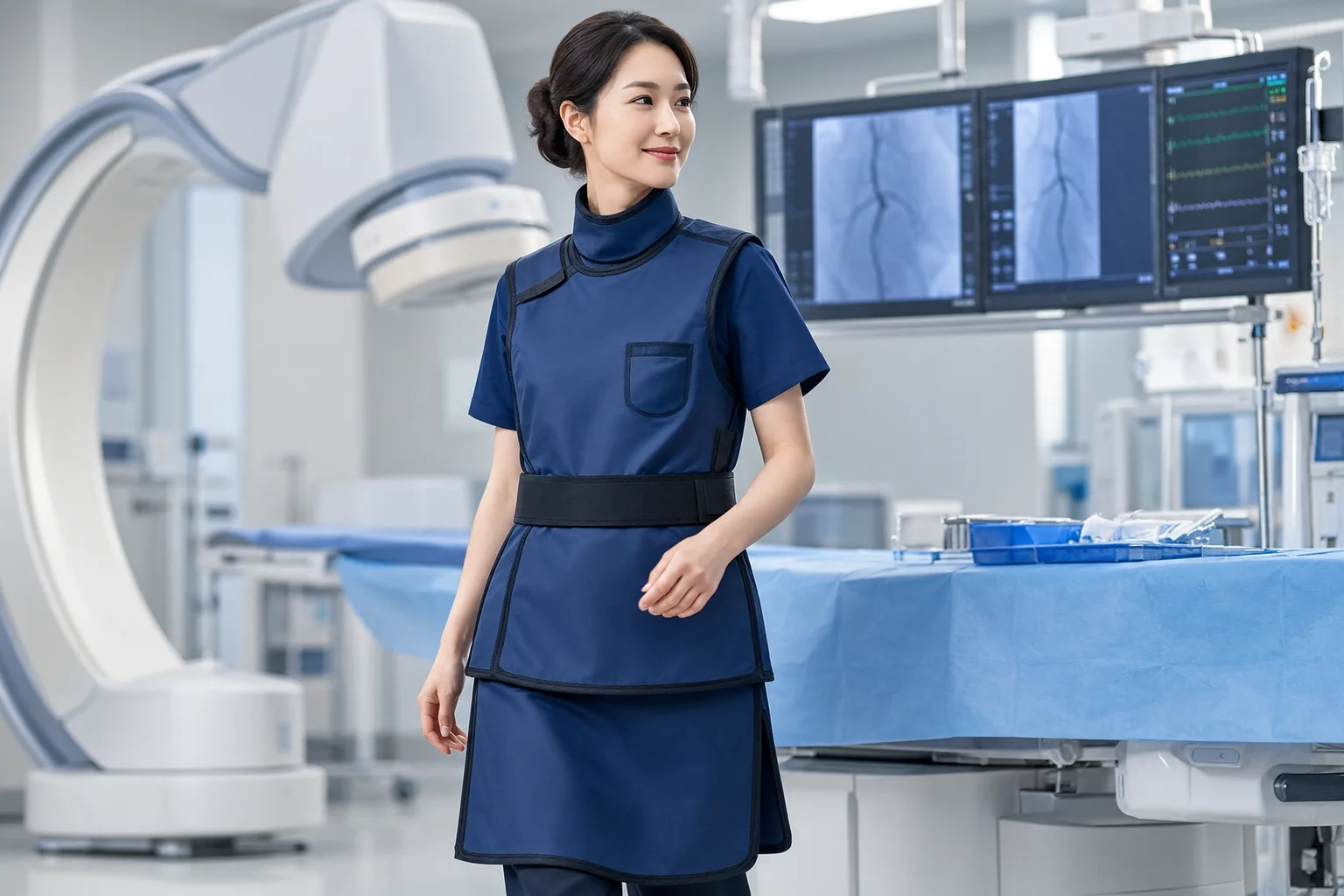
Frontal Aprons Versus Two-Piece Vest and Skirt Systems
Procedural role strictly determines the structural cut your department personnel require. In general diagnostic radiology suites where technologists remain behind shielded structural barriers during actual exposures, traditional frontal aprons provide efficient and swift donning protection. These single-panel units feature open backs that enhance air circulation and eliminate unneeded material, suiting brief patient positioning interventions where staff constantly face the beam axis.
Interventional radiology suites and cardiology catheterization laboratories require 360-degree wraparound apparel. Interventionalists, scrub nurses, and circulating personnel rotate continuously around examination tables, exposing lateral flank and back tissues to scattered radiation. A dedicated two-piece vest and skirt redistributes up to seventy percent of apparel weight directly onto the pelvic structure rather than hanging entirely from the shoulders, dramatically curbing chronic lumbar fatigue during four-hour procedures.
Vital Ancillary Shields and Sizing Assessment Protocols
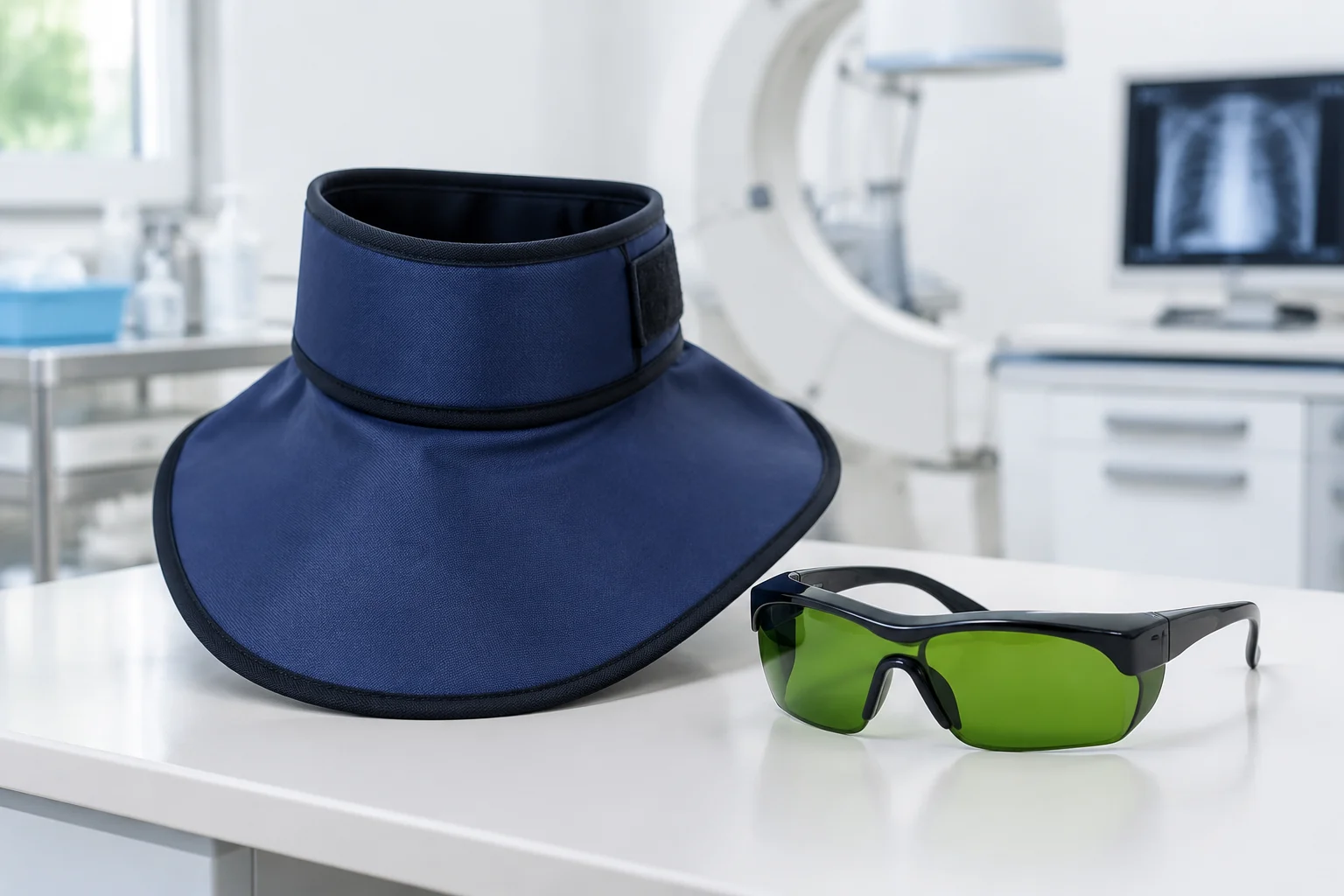
Torso protection garments provide baseline defense, but radiosensitive organs demand tailored ancillary equipment engineered for snug anatomical fit. Gaps caused by oversized neck openings or ill-fitted collars dramatically increase scatter penetration toward vulnerable endocrine structures. Equipping your clinical staff with properly matched supplementary accessories guarantees comprehensive coverage without compromising procedural vision or dexterity.
- Anatomical thyroid collars with minimum 0.50 mm Pb equivalence and magnetic closures for rapid sanitization.
- Optical radiation glasses featuring 0.75 mm Pb front lenses and integrated lateral splash scatter shields.
- Routine departmental sizing clinics verifying armhole contour and pelvic skirt overlap to prevent scatter exposure gaps.
[ FACTS ] KEY DEPARTMENT METRICS
- Weight Reduction (Lead-Free)
- 20% – 25% lighter than standard lead
- Frontal Lead Equivalence
- 0.35 mm Pb (general) / 0.50 mm Pb (interventional)
- Weight on Pelvic Girdle
- 70% transferred off cervical spine
- Inspection Frequency
- Every 12 months minimum (semi-annual in cath labs)
Audit Your Department's Protective Fleet
Schedule an on-site departmental assessment to identify worn shielding cores, standardize ergonomic sizing for imaging personnel, and implement regulatory garment tracking systems.
Request Equipment Consultation
[ 04 ] VERIFIED CLINICAL DISCUSSION
Dr. Marcus Vance
Transitioning our cardiac cath lab staff to two-piece vest and skirt sets solved longstanding lumbar strain complaints across long catheterizations. The seventy percent weight shift to pelvic support truly makes a measurable clinical difference over eight-hour shifts.
Leave A Comment